Herbal Tea Steeping Temperature Chart: 195°F Leaves vs. 212°F Ginger Simmer
Most home-brewed loose herbal tea tastes bitter or flat for two simple reasons: pouring rolling 212°F water onto delicate flowers, and leaving the mug uncovered so aromatic oils escape as steam. Use this exact 6-herb chart beside your kettle.
The 6-Herb Exact Steeping Temperature & Ratio Chart
Different plant parts hold flavor differently. Fluffy dried leaves weigh less per teaspoon than dense roots, so measure with level teaspoons of cut-and-sifted (C/S) herbs rather than fine powders (which slip through strainers and turn murky).
| Kitchen Herb | Plant Part | Dry Herb / Water | Water Temp | Steep Time | Lid & Method Rule |
|---|---|---|---|---|---|
| German Chamomile Matricaria recutita |
Whole dried flowers | 1–2 level tsp / 8 oz (~1–2 g; up to 1 tbsp to taste) |
195°F 90s off boil |
7–10 min | Cover mug with saucer. Steeping past 12 min turns floral notes bitter. |
| Peppermint Leaf Mentha × piperita |
Cut & sifted leaf | 1–2 level tsp / 8 oz (~1–2 g; 1 tsp in blends) |
195°F 90s off boil |
7–10 min | Cover tightly so crisp menthol oils stay in your cup instead of escaping. |
| Lemon Balm Leaf Melissa officinalis |
Cut & sifted leaf | 1–2 level tsp / 8 oz (~1–2 g; 1 tsp in blends) |
195°F 90s off boil |
7–10 min | Cover mug tightly. Delicate citrus-mint aroma fades fast under a hard boil. |
| Culinary Thyme Thymus vulgaris |
Dried whole leaf | 1/2–1 level tsp / 8 oz (~0.5–1 g) |
195°F 90s off boil |
7 min | Cover mug. Stop at 7 minutes to keep savory thyme smooth, never sharp. |
| Hibiscus Petals Hibiscus sabdariffa |
Cut dried calyces | 1 level tsp hot 1.5 tsp iced / 8 oz |
195°F–205°F or cold steep |
8 min hot (8–12 hr cold) |
Hot steep covered for ruby tea, or cold-steep in fridge for zero tart bite. |
| Dried Ginger Root Zingiber officinale |
Cut & sifted root | 1 level tsp / 10 oz (~2 g; yields ~8 oz) |
205°F–212°F gentle simmer |
15 min | Simmer in a covered small saucepan on low heat; extra 2 oz offsets steam loss. |
Two Simple Habits That Fix 90% of Bitter or Weak Cups
-
1
Use the 90-Second Kettle Rest Rule (No Thermometer Needed): Bring water to a boil (212°F), click the kettle off or lift it from the burner, and wait 90 seconds with the lid cracked. The water drops naturally to ~195°F—hot enough to extract full flavor from chamomile, peppermint, lemon balm, and thyme without scorching delicate tissues.
-
2
Follow the Saucer Lid Rule Every Single Cup: Place a small ceramic saucer or coaster directly over your mug while steeping. Aromatic leaves carry their signature scent in light volatile oils; leaving the mug open lets those oils float away in the steam. After 7–10 minutes, tip the condensation on the underside of the saucer right back into your mug.
-
3
Give Loose Herbs Room to Expand: Use a wide fine-mesh basket infuser or steep directly in a mug and pour through a kitchen mesh strainer. Cramped metal tea balls pack wet leaves tightly together and produce weak tea.
Mixing Roots + Leaves in One Cup: The 2-Stage Saucepan Pour
Dried ginger root needs 15 minutes of gentle stove heat to release its warming spice, while peppermint, lemon balm, and hibiscus turn harsh if boiled that long. Combine them cleanly in 3 quick steps:
-
1
Simmer the Root First (15 Minutes Covered): Add 1 level tsp dried cut ginger root to 10 fl oz water in a small saucepan. Bring to a gentle simmer, cover tightly, and hold on low heat for 15 minutes.
-
2
Turn Off the Burner & Rest 60 Seconds: Cut the heat and let the covered pot settle off the boil toward ~195°F.
-
3
Steep Delicate Leaves Off-Heat (7 Minutes Covered): Stir in 1 level tsp peppermint or lemon balm (and an optional 1/2 tsp hibiscus—never simmer hibiscus), replace the lid for 7 minutes, then strain into your mug.
Quick Vessel Scaling Cheat Sheet
| Vessel Size | Herb Multiplier | Practical Kitchen Note |
|---|---|---|
| Single Mug (8 fl oz) | 1× chart ratio | Standard baseline for leaves, flowers, and thyme. |
| Ginger Saucepan (10 fl oz → 8 fl oz) | 1 level tsp ginger / 10 oz | Extra 2 oz water replaces steam lost during the 15-min covered simmer. |
| Teapot (24 fl oz / 3 cups) | 3× single-cup ratio | Pre-warm the pot with a splash of hot tap water before adding herbs. |
| Hot Brew Poured Over Ice (8 fl oz) | 1.5× leaf or petal ratio | Prevents meltwater dilution; ideal for hibiscus-peppermint refreshers. |
Saveable Visual Reference Cards
Pin or bookmark these two quick visual reminders for your kitchen tea shelf:
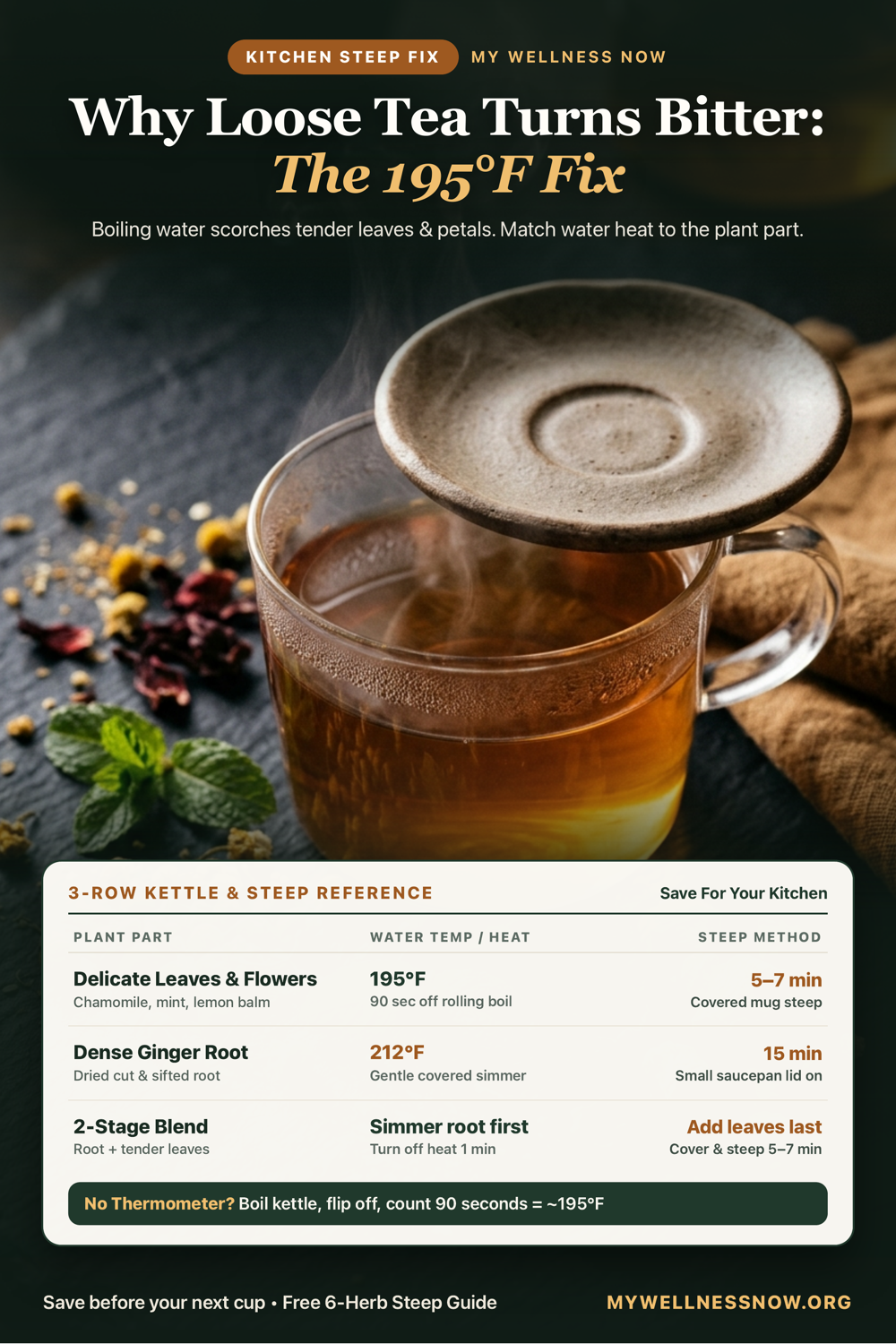
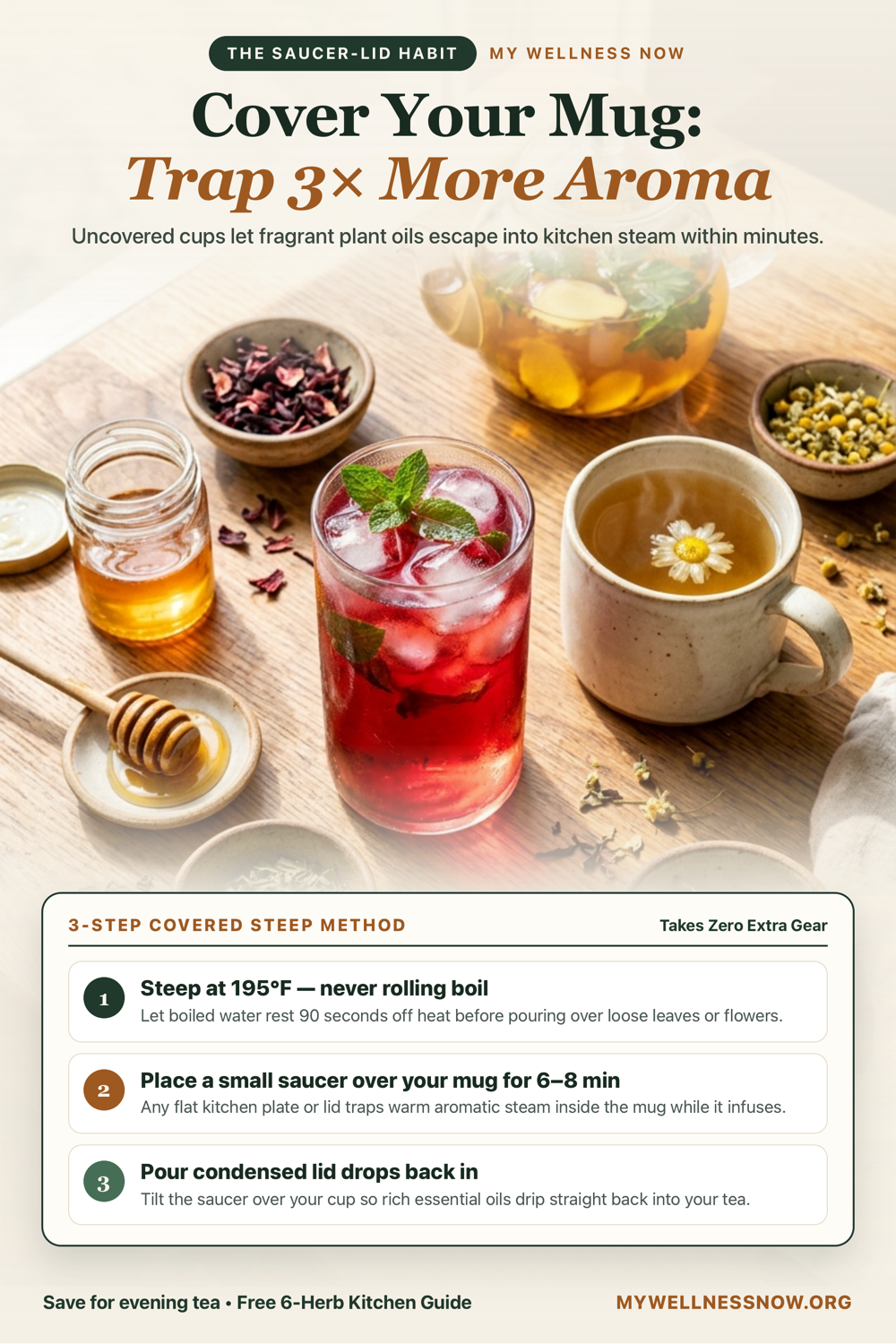
Print the 1-Page Fridge Steep Card & Get Your 6-Herb Plan
Keep the exact temperatures and ratios taped inside your tea cabinet, or take our 30-second quiz to get a tailored under-$45 6-herb pantry roadmap and 6 cut-out jar labels.