60-Second Kitchen Herbal Safety & Storage Freshness Checklist
Everyday culinary dried herbs are gentle for most healthy adults in occasional teacup amounts, yet "natural" never means interaction-free. Scan this 6-herb safety table and glass-jar storage schedule before building a daily tea routine or buying herb #7.
Plain-English 6-Herb Safety & Medication Check Table
Share any regular herbal tea habit with your pharmacist or physician alongside prescriptions and supplements. Use this table as a practical pre-check before starting daily cups:
| Starter Herb | Key Sensitivities, Pregnancy & Medication Cautions | Jar Refresh Window |
|---|---|---|
| German Chamomile Matricaria recutita |
Allergy & Med Check Asteraceae (daisy/ragweed) family—avoid with ragweed or marigold allergies. Check with a pharmacist if taking blood thinners (warfarin), sedatives, or transplant medications (cyclosporine/tacrolimus). Pause daily use 1–2 weeks before surgery. |
9 months (whole dried flowers) |
| Peppermint Leaf Mentha × piperita |
Reflux & Iron Note Menthol can relax the lower esophageal valve and worsen acid reflux (GERD) or heartburn. Use caution with gallstones or bile duct obstruction, and separate from iron supplements (polyphenols can reduce non-heme iron absorption). |
9 months (cut & sifted leaf) |
| Dried Ginger Root Zingiber officinale |
Blood Thinners & Pregnancy Cap Check with a clinician if taking blood thinners, diabetes/blood-sugar medications, or if you have gallstones or a bleeding disorder. Pause concentrated daily use 1–2 weeks pre-surgery. Pregnancy note: 1 tsp dried ginger ≈ 2 g—check with your OB before exceeding 1 g/day. |
12 months (cut & sifted root) |
| Lemon Balm Melissa officinalis |
Thyroid & Sedative Check Check with a healthcare provider before regular daily use if you take thyroid hormone medication (such as levothyroxine) or prescription sedatives. |
6 months (most delicate aroma) |
| Culinary Thyme Thymus vulgaris |
Culinary Tea Only Normal culinary tea amounts (1/2–1 tsp) are widely enjoyed; avoid concentrated medicinal doses or internal thyme essential oil—especially during pregnancy. Check with a clinician if taking blood thinners/antiplatelets or before scheduled surgery. |
9 months (dried whole leaf) |
| Hibiscus Petals Hibiscus sabdariffa |
Avoid in Pregnancy Avoid during pregnancy. May interact with blood-pressure medications, diuretics, diabetes medications, or acetaminophen clearance; use caution with low baseline blood pressure. Rinse mouth with plain water after drinking to protect tooth enamel. |
12 months (cut dried calyces) |
5 Non-Negotiable Kitchen Herbal Safety Habits
-
1
Zero Wild Foraging Without In-Person Botanical Training: Never harvest wild plants from roadsides, parks, or backyards based on a phone app or photo. Buy only clearly labeled, food-grade culinary dried herbs with botanical Latin names from reputable suppliers.
-
2
Introduce One New Herb at a Time: Brew a single half-cup test of any herb you have never tried before mixing 3-herb blends, so you can recognize any personal allergy or stomach sensitivity right away.
-
3
Never Put Essential Oils in Tea: Essential oils are highly concentrated extracts that do not dissolve in water and can irritate internal tissue. Stick strictly to whole dried flowers, cut-and-sifted leaves, and dried culinary roots.
-
4
Respect Moisture & Infant Rules in Honey & Iced Teas: Pantry honey jars require strictly bone-dry herbs and dry spoons; fresh-ginger honey must stay refrigerated (≤40°F) for 5 days max; never give honey to infants under 12 months. Cold-brew herbal pitchers strictly in the refrigerator (never counter sun tea) and finish within 3 days.
-
5
Pause Concentrated Daily Herbs 1–2 Weeks Before Surgery: Always disclose your regular herbal teas to your doctor, pharmacist, or surgical team alongside prescriptions and over-the-counter supplements.
6–12 Month Glass Jar Storage & Freshness Checklist
Why Small 2–4 oz Starter Bags Beat 1-Pound Sacks: Aroma fades long before dried herbs look "spoiled." Buying 2 oz bags of leaves/flowers and 4 oz bags of dried ginger/hibiscus ($32–$44 locally) ensures you finish every jar while it still smells bright and vibrant.
| Storage Rule | What to Do in Your Kitchen | What to Avoid |
|---|---|---|
| Airtight Glass Jars | Transfer bulk bags into clean, completely dry 8 oz mason or amber glass jars with tight lids. | Leaving herbs in unsealed paper bags or thin zip bags where aroma escapes. |
| Cool, Dark Cabinet | Pick an upper cupboard away from appliances; use amber glass if kept on an open shelf. | Storing jars directly above the stove, kettle steam vent, dishwasher, or sunny windowsill. |
| Date Every Lid | Write the opened date and refresh target: 6m lemon balm; 9m chamomile, peppermint, thyme; 12m ginger, hibiscus. | Guessing how old a jar is—use the pinch-and-sniff test before brewing. |
| Cut & Sifted (C/S) | Choose whole flowers or cut-and-sifted leaves that look brightly colored and smell crisp when pinched. | Fine herb powders (they oxidize quickly and slip through tea strainers into silty cups). |
Saveable Visual Reference Card
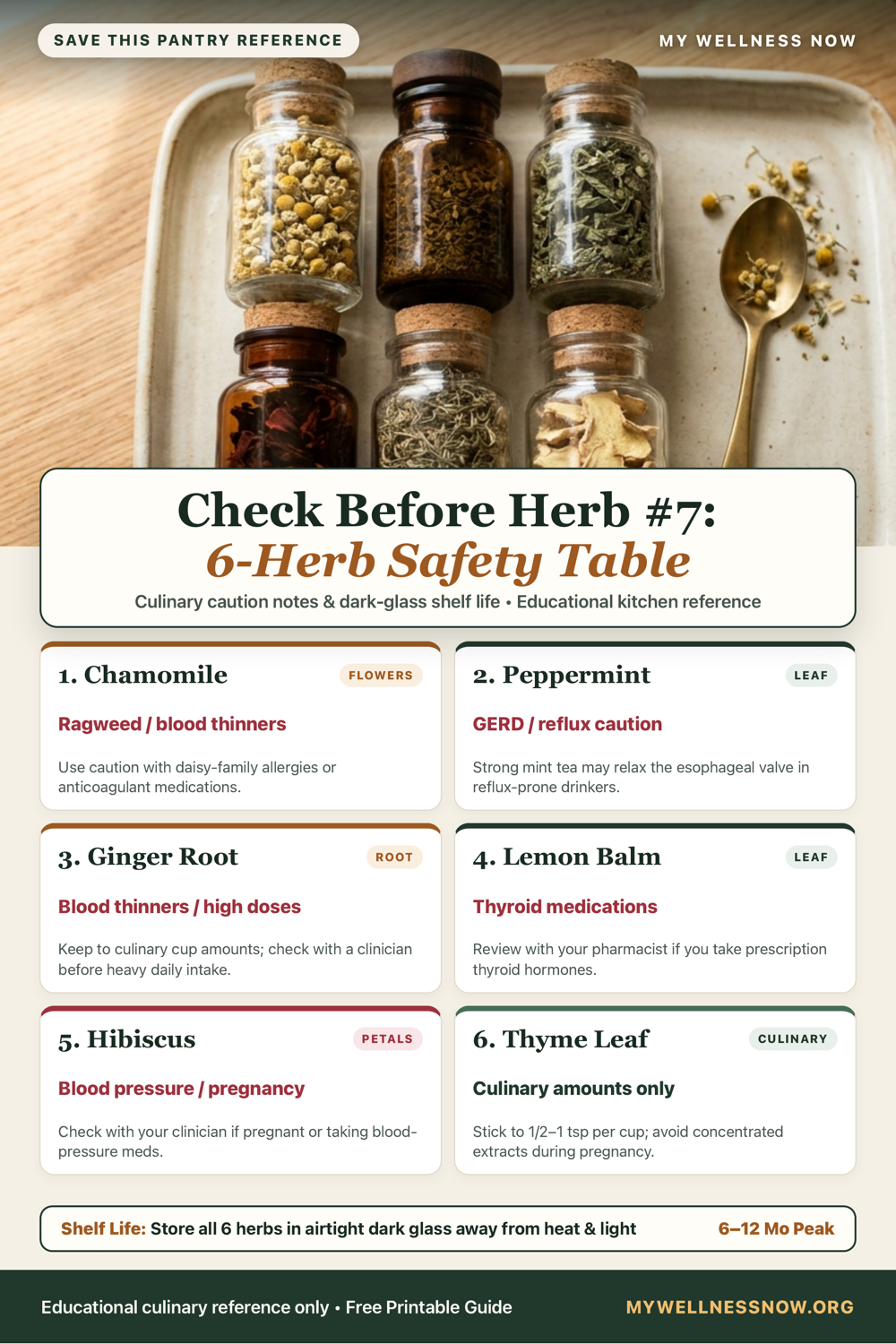
Print the 2-Page Safety & Clinician Check-In Checklist
Keep our plain-English safety sheet inside your tea cupboard (includes space to jot down your planned herbs for your next pharmacist or doctor visit), or take our 30-second quiz to get all 6 cut-out dated jar labels.
Full 6-Page Handbook (with 6 Dated Jar Labels): Open The Everyday 6-Herb Kitchen Pantry Starter Guide (PDF)
Weekly Kitchen Tea Note: Join our free Saturday newsletter on beehiiv (1 short practical note per week, zero daily spam).
Expanding beyond 6 starter herbs later? Preview The Medicinal Garden Kit + Printed Herbal Guide (affiliate link—may earn My Wellness Now a referral commission at no extra cost to you; 10 non-GMO herb seed packets plus printed traditional reference guide; always apply this safety table and treat all content strictly as culinary/educational reference).